the answer is your gut
you might want to listen this time.

Fix This First - everything else is merely a symptom.
The rain pitter-patters against the window pane. Soft lo-fi beats radiate through the air to my eardrums. This one is special; let’s get into it.
I spent the first thirteen years of my life feeling like something was wrong with me. Knowing that something was off, but not having the words or understanding of where to begin.
Not dramatically wrong. Not sick in a way that sent me to hospitals, just something that created worry in my scared parents badly enough to dig deeper. I was chronically off. Itchy in ways I could not explain. Tearing my skin apart as I slept. Distracted when I needed to focus. Irritable without a clear reason. Sleeping but never really recovering. Training and wondering why my body felt like it was working against me instead of with me.
Everyone around me treated it as personality. That is just how he is. Sensitive. Easily distracted. High energy. The labels that adults put on children when they do not have a better explanation. In middle school, I was diagnosed with ADHD and went to therapy, but the symptoms remained.
The actual explanation was wheat and soy. Yep, food allergies.
I did not find that out until seventh grade, when a doctor who thought differently became suspicious, ran the correct tests, identified the allergens, and put me on an elimination diet that changed the entire texture of my daily life. Within a week, the usual reflexive itching stopped. The brain fog lifted. Sleep started doing what sleep is supposed to do. Training felt like progress instead of a fight against my own biology.
What I did not understand until then, and what most people never understand at all, is that the allergies were not the root problem. They were the symptom of something deeper. The actual problem was my gut, and what was happening inside it had been quietly running every system in my body since before I was old enough to question why I felt the way I felt.
Here is what nobody told me. And what almost nobody is telling you.
I. The Second Brain You Did Not Know You Had
There is a network of over 500 million neurons lining your gastrointestinal tract. For context, that is more neurons than your entire spinal cord contains. Neuroscientists call it the enteric nervous system. The rest of us should call it what it actually is: your second brain.
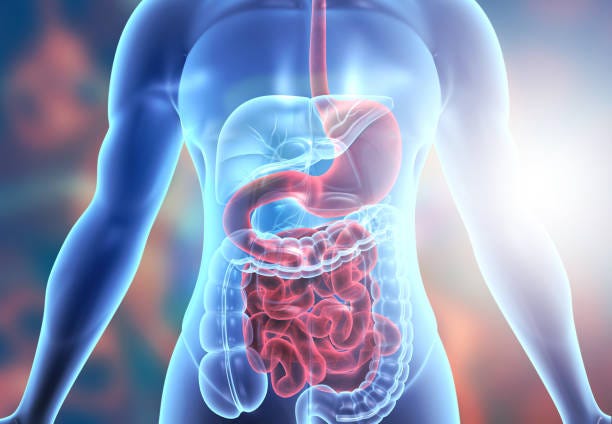
This system does not just digest food. It communicates directly with your central nervous system through a bidirectional highway called the vagus nerve. The traffic runs both ways, but here is the part that should stop you cold: roughly 90 percent of the signals travel from the gut up to the brain. Not the other way around.
If you want a scary pathway to research Braak’s Hypothesis, but that’s a topic for another day.
Your brain is largely receiving information from your gut. Not sending it.
The gut and brain are connected.
That connection is not metaphorical or imagined. It is a physical nerve network, and the gut is the dominant sender, like your crazy ex. Your cognitive and emotional state is being shaped by intestinal signals before your prefrontal cortex has any input in the matter.
This means the psychological work you are doing, the journaling, the mindset practice, the discipline routines, is happening downstream of a biological system you have probably never thought about. At least not enough to realize that your work may be futile. You are trying to change the output without touching the input. The most honest thing the mental health and performance industries could tell you is that a significant portion of anxiety, mood instability, brain fog, and chronic underperformance is a gut problem wearing a psychological mask. A 2019 study published in Nature Microbiology analyzing data from over 1,000 participants found that people with depression consistently showed depletion of specific gut bacteria, particularly Coprococcus and Dialister species, independent of antidepressant use. The bacteria were missing. The mood was dysregulated. The arrow of causation pointed somewhere most practitioners are not trained to look.
II. The Systems Your Gut Is Quietly Controlling
Mood and mental health
Approximately 90 percent of the body’s serotonin is produced in the gut. You read that right. Serotonin is not just the happiness chemical. It regulates sleep, appetite, pain sensitivity, libido, cardiovascular health, and emotional stability. If your gut microbiome is disrupted, your serotonin factory is disrupted, and thus its production. The antidepressants that 13% of Americans currently take are working downstream of the actual production site. TL;DR: They probably aren’t doing what you want them to…
A 2015 study from the California Institute of Technology demonstrated that germ-free mice raised without any gut bacteria had dramatically lower serotonin levels compared to normal mice. Interestingly enough, the microbes themselves did not create the serotonin; the metabolites they created, such as short-chain fatty acids (SCFAs), did by stimulating colonic enterochromaffin (EC) cells to biosynthesize them. Those same mice also had slower gut motility, which will be explored in more depth later. When researchers colonized them with specific spore-forming bacteria, serotonin levels normalized. Gut bacteria are not passengers in your biology. They are active manufacturers of the chemicals your brain runs on.
I, unfortunately, did not need a study to tell me this. I lived the before and after. The irritability I carried for years, the low-grade frustration that sat just underneath everything, did not go away when I got more disciplined or more positive using affirmations. It went away when I stopped feeding my gut the two things it had been rejecting since birth. The mood was always downstream of the biology. I just didn’t know where the biology started. Now you do.
The immune system and allergies
Scientists concur that roughly 70%-80% of your immune cells (lymphocytes) reside in the gut, specifically in Gut-Associated Lymphoid Tissue (GALT). The microbiome is in constant negotiation with your immune cells, teaching them what a threat is and what is not. This is how the gut maintains immune homeostasis. When the microbiome is healthy and diverse, the immune system is calibrated correctly. When it is disrupted, the immune system loses the ability to distinguish between genuine threats and benign substances. When it can’t do that, it attacks… well, everything. This can be attributed to a reduced number of regulatory T cells (Tregs), which are responsible for suppressing inflammatory responses to harmless substances.
This is the mechanism behind allergies. Not just food allergies. Environmental allergies, seasonal allergies, skin reactions, and asthma. The hygiene hypothesis, first proposed by epidemiologist David Strachan in 1989 and substantially developed since, suggests the dramatic rise in allergic conditions across Western populations over the last fifty years tracks almost precisely with changes in gut microbiome diversity. Antibiotics, processed food, reduced exposure to natural environments, and cesarean births bypass the bacterial transfer of the birth canal. All of it chips away at the microbial diversity that keeps the immune system calibrated. Another hypothesis is that humans lack exposure to some of our “old friends” (microbes we co-evolved with) that cause immune dysfunction.
A landmark 2016 study in Science examined Amish children raised on traditional farms versus Hutterite children raised on industrialized farms. Despite similar genetics, the Amish children had dramatically lower rates of asthma and allergies. The difference was microbial diversity. Their immune systems had been trained on a richer bacterial curriculum.
My allergies did not appear because I was unlucky. They appeared because my immune system, working from a compromised gut, lost its ability to correctly classify wheat and soy as harmless. The elimination diet did not cure the allergy through willpower. It removed the inflammatory trigger long enough for the gut to begin recalibrating and mend the epithelial lining that had been wreaking havoc and causing endless inflammation. That is a mechanical process, not a wellness trend.
If you have allergies, seasonal or food-based, that appeared or worsened in your teens or twenties, the most likely explanation is not that you suddenly became genetically susceptible. Something disrupted your microbiome. Your immune system lost its calibration. The allergy is the signal. The gut is the source. Trace it back, you may be surprised by what you can find and remedy.
Hormones and testosterone
The gut microbiome directly influences cortisol production, insulin sensitivity, and testosterone metabolism through a collection of bacterial genes called the estrobolome, which produces an enzyme called beta-glucuronidase that regulates how hormones are processed and cleared from the body.
A disrupted microbiome can overproduce this enzyme, accelerating hormone clearance and throwing off the testosterone-to-estrogen ratio in men because estrogen is reabsorbed rather than excreted. Research published in the Journal of Steroid Biochemistry and Molecular Biology has documented the relationship between microbiome composition and androgen metabolism. This leads to high levels of circulating estrogen (estrogen dominance), which can, in turn, lower the ratio of testosterone to estrogen in men.
You cannot out-supplement a broken gut. The testosterone booster sitting on your shelf is being metabolized by a system that may be actively working against it. Further, as we just learned, the gut barrier, if compromised (leaky gut), can lead to systemic inflammation, which further impairs hormone receptor sensitivity and liver metabolism, making supplements less effective.
Focus, cognitive function, and brain fog
The gut produces dopamine precursors and regulates GABA, the primary inhibitory neurotransmitter responsible for calm focus and anxiety suppression. It also signals the production of brain-derived neurotrophic factor, a protein that supports neuron growth and maintenance. A 2021 review in Frontiers in Psychiatry examining the gut-brain axis concluded that microbiome composition is meaningfully associated with performance on measures of memory, attention, and executive function.
I know what compromised focus feels like from the inside. When I was consuming my allergens without knowing it, sitting still felt impossible, and focusing took immense effort. Not because I lacked discipline. My gut was sending distress signals to my brain on a frequency I did not know how to interpret. The itching and the distraction and the inability to lock in were not separate problems. They were one problem expressing itself through multiple channels simultaneously. I just didn’t have the map to see the connections.
Brain fog is not a personality trait. It is not a consequence of not meditating enough. It is often a gut symptom wearing a cognitive mask. You will not think your way out of it.
Body composition
This is a fun one. The balance between two dominant bacterial phyla, Firmicutes and Bacteroidetes, influences how efficiently calories are extracted from food, how fat is stored, and how the body responds to insulin. A classic 2006 study in Nature found that this ratio was transferable between animals. When researchers transplanted gut bacteria from obese mice into lean germ-free mice, the lean mice gained significantly more body fat despite no change in diet. FYI, higher Firmicutes, lower Bacteroidetes is more efficient at extracting calories from food. This shows the possibility of gut bacteria alone influencing fat storage, independent of calorie intake…
Two people eating identical diets can have measurably different body composition outcomes based purely on gut bacteria composition. You can be doing everything right on paper and still fighting your own biology because the foundation has never been addressed.
As I did more research, I stumbled upon this nuance: newer studies show that the relationship is more complex than just a simple ratio. While many studies confirm the pattern, some meta-analyses indicate that the Firmicutes-to-Bacteroidetes ratio is not a universally robust marker of obesity, as individual variations are high. However, the foundational principle that the type of bacteria matters for weight management remains true.
Sleep
The gut produces and regulates melatonin precursors and influences the circadian rhythm through microbial signaling. Disrupted gut flora has been consistently associated with disrupted sleep architecture in clinical literature. When my allergen consumption was high, sleep was technically happening, but not restoring. I would wake up having slept eight hours and feel like I had slept five. The gut was running a low-grade inflammatory response all night. The body was not recovering. It was managing.
III. Why Nobody Told You This
Because it is inconvenient. Not only that, it undermines so many business models in medicine, healthcare, and education. They don’t want you to be able to think and put these connections together. They want you to have to rely on their services, their “miracle” pills, and procedures that force you to fork over all your cash to them. Anyways, I digress.
Fixing your gut requires dietary consistency sustained over months, not weeks. It requires identifying your personal inflammatory triggers, which are different for every person and cannot be determined by a generic clean eating plan. It requires rebuilding microbial diversity through specific foods and, in some cases, specific interventions. None of that has a dramatic before and after. None of it can be packaged into a thirty-day program with a clean narrative arc.
The fitness industry sells transformation. The supplement industry sells shortcuts. The food industry spends billions ensuring that the most gut-disruptive products are also the most available, affordable, and addictive options on the market.
Nobody in that ecosystem profits from you having a healthy gut. So nobody in that ecosystem is going to tell you that it is the foundation on which everything else is built.
Here is the hard truth.
You can optimize every variable above the gut and still be operating at sixty percent of your actual capacity.
The training, the sleep, the supplementation, the mindset work, all of it is running on hardware you have never questioned or worked on. Most people will read this, feel the truth of it, and change nothing. Changing this is slower and less visible than any other. There is no mirror feedback. No number on a scale that moves in a satisfying direction. Just a gradual, compounding shift in how you feel, think, perform, and recover that most people never experience because they never address the root. If we’re honest, that’s how progress should be measured.
The ones who do address it do not just feel better. They operate differently. At a level that looks from the outside like genetics, discipline, or luck.
It is none of those things. It is the gut.
What follows is for paid subscribers.
The protocol. Specifically: how to identify your personal inflammatory triggers using an elimination framework, how to rebuild microbiome diversity through diet before spending a dollar on supplements, the specific foods and fermented products with the strongest research behind them, how to address the testosterone-gut axis directly, what the research says about reversing allergy sensitization over time, and the realistic timeline for what changes at each stage of the rebuild.
This is not a wellness guide. It is a system built from research and lived experience. It is behind the paywall because systems have value, and free advice is often ignored.
Subscribe below.
If this made you think of someone who needs it, send it to them. That is how we all grow together.

Keep reading with a 7-day free trial
Subscribe to The Iro Method to keep reading this post and get 7 days of free access to the full post archives.